
Imagine writing your EE draft, only to remember you still have to figure out your Math IA, Biology IA, and the list just goes on. The EE is part of the IB Core, contributing to those famed 3 additional points, while the subject IAs make up a decent chunk of your final grade. Along with TOK and extracurriculars, how on Earth is one meant to manage all of these assignments?
Clearing up the Misconceptions
Many students stress about these 2 daunting tasks because of fundamental misconceptions about them. In reality, both are entirely doable given proper time management and commitment, even if your topic is rather simple.
Misconception 1: Your EE/IA needs to be an original, unique, and complex idea
It’s easy to see these assignments as your ultimate chance to be creative and show off your skills. Ultimately, both can be satisfactory as long as you have good arguments and stick to the assessment criteria. Examiners don’t expect students to discover new things; they want to see how you analyze and interpret things, be it results from a chemistry experiment or word choice in a novel. Additionally, try to use content from your respective subject course. Don’t stray too far beyond it because you’ll only be giving yourself a harder time than necessary. It’s enough to pick something course-appropriate and show in-depth understanding and evaluation.
Misconception 2: Having many sources makes an EE good
The key to a successful EE is to engage critically with your material, even if you are dealing with secondary data. However, you should have an element of discovery, with some relevant claims/data that are entirely your own. Relying almost solely on secondary sources diminishes personal engagement and limits your original arguments.
Misconception 3: IAs can be written quickly and right before the deadline
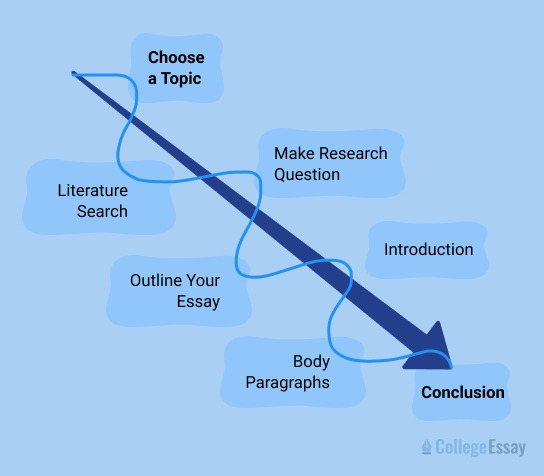
Nothing in the IB can truly be “written quickly and right before the deadline” if you want to keep to good quality. IAs require extensive preparation, including initial research into your topic, an outline, a first draft, and a final draft. This doesn’t even include the data collection that science IAs (and sometimes Math IAs) require. Ideally, thinking of some IA topics during summer would be a great starting point. Try to always do your IA tasks a week ahead – that way you can come back to your writing and see if there is anything to improve before the deadline. IAs can be a significant help for your final grade, so it’s best not to mess around with them.
Scoring High in Both
Extended Essay
Clarity and original arguments are the foundation of a good EE. There are 5 criteria to consider, all with their own challenges. Firstly, the research question must be precise. Like with the Personal Project, nothing can be vague or unfocused. A focused topic makes for focused research. This allows you to develop an appropriate method to address your question, using appropriate sources. Furthermore, you need to show that you truly understand what you’re talking about by using subject-specific terminology and sources. Everything should tie back to answering your research question.
Criterion C is the largest point contributor in the EE, as it focuses on research and critical thinking. Anything and everything should be supported by adequate evidence, with proper analysis that always connects back to your RQ. Remember to evaluate any limitations to your method, your sources, or results. To do this, present your EE very formally and professionally. This refers mainly to the structure and layout, which are easy aspects to score marks on, so don’t underestimate a well-formatted EE.
Finally, personal engagement truly makes or breaks the EE. This contributes 6 points, and it will make the entire process much more enjoyable. Proper reflection and preparation show strong engagement. Collecting your own data (if possible) and experimenting with different approaches and perspectives show a deep exploration of your topic. Your EE is the perfect time to discover more about the subjects and topics you’re interested in. Just remember not to fly too close to the Sun and pick an incredibly difficult or time-consuming topic. The EE serves as a way to get those extra points, so don’t go far beyond what is covered by your courses. You are definitely expected to apply to harder topics than those studied in class, but just make sure it’s doable.
Remember to avoid the following common mistakes to score well!
● Unfocused question, too broad of a topic
● Topic is too difficult or goes far beyond the respective course
● Starting too late
● Not turning in a complete first draft
● Descriptive rather than analytical
● Ignoring subject-specific assessment criteria
● Incorrect citations
Internal Assessments
The IAs vary depending on the subject (much like the EE), but the general gist is quite similar. Humanities and languages focus greatly on deep analysis and engagement. For languages, focus on using literary works or topics that you’re very comfortable with and could talk about for over 15 minutes. Look for small details that you can connect to an overarching theme. In humanities, the idea is to understand your topic and analyze it well. Strong evaluations are important in any aspect of IB.
Science and Math IAs are arguably harder, so remember to choose a topic you’re confident that you can do well in. It’s not time to experiment with crazy chemicals or concepts. Stick to something feasible that will guarantee usable data. Use appropriate methodology that you can connect back to your topic question to sufficiently answer it, and be able to evaluate any limitations. The key is to be as precise as possible, even in small details. Make sure significant digits and equations are all correct, and, again, don’t overlook the importance of a strong evaluation.
Again, here are some common mistakes to avoid:
● Insufficient data
● Neglecting limitations or uncertainties
● Overly descriptive
● Misapplying formulas or concepts
● Ignoring the assessment criteria
● Incorrect citations where applicable
So, how do we do it?
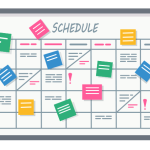
Of course, time management is essential, but how can that be achieved? The best way to approach this is by setting micro-deadlines. Many teachers may already set these for you, but try to always do even smaller tasks a week before the deadline. Look ahead in your calendar and identify busy weeks, so you can avoid working on your EE and IAs when you have other priorities. Try to incorporate both your teachers’ deadlines and your own to stay on top of everything. For EE specifically, try to do the large majority of it over summer. Ideally, conduct any necessary research then and produce at least a decent first draft.
Some people may find it helpful to dedicate certain days to different tasks. Mondays and Wednesdays can be for your EE, and others for your IAs. Just make sure to never go longer than 2 weeks without looking at either your EE or IAs. Actively work on them whenever you have time, particularly the EE. Use physical planners or journals to sort out your day, or create a Google Doc that you’re sure you’ll use.
Of course, don’t exhaust yourself. IB DP2 is easily the most stressful year, especially on top of university applications. Stretch your work out over time to avoid hour-long sessions in a single day. Try to reward yourself for completing smaller tasks, such as finding a topic or finishing an outline.
Final words
The EE and IAs are integral to the IB program, and they can make great conversation points in university interviews or at least valuable boosters to your grades. Regardless, planning and always being 2 steps ahead is crucial to ensure a smooth-sailing journey. Choose topics that are realistic, while still being interesting to some extent. Don’t commit to more than you can handle, and remember to communicate with your teachers whenever you can. Good luck!!!
as per: https://www.revisiondojo.com/blog/mistakes-to-avoid-in-ib-extended-essays
as per: https://www.revisiondojo.com/blog/common-pitfalls-in-internal-assessments-ias-and-how-to-avoid-them