

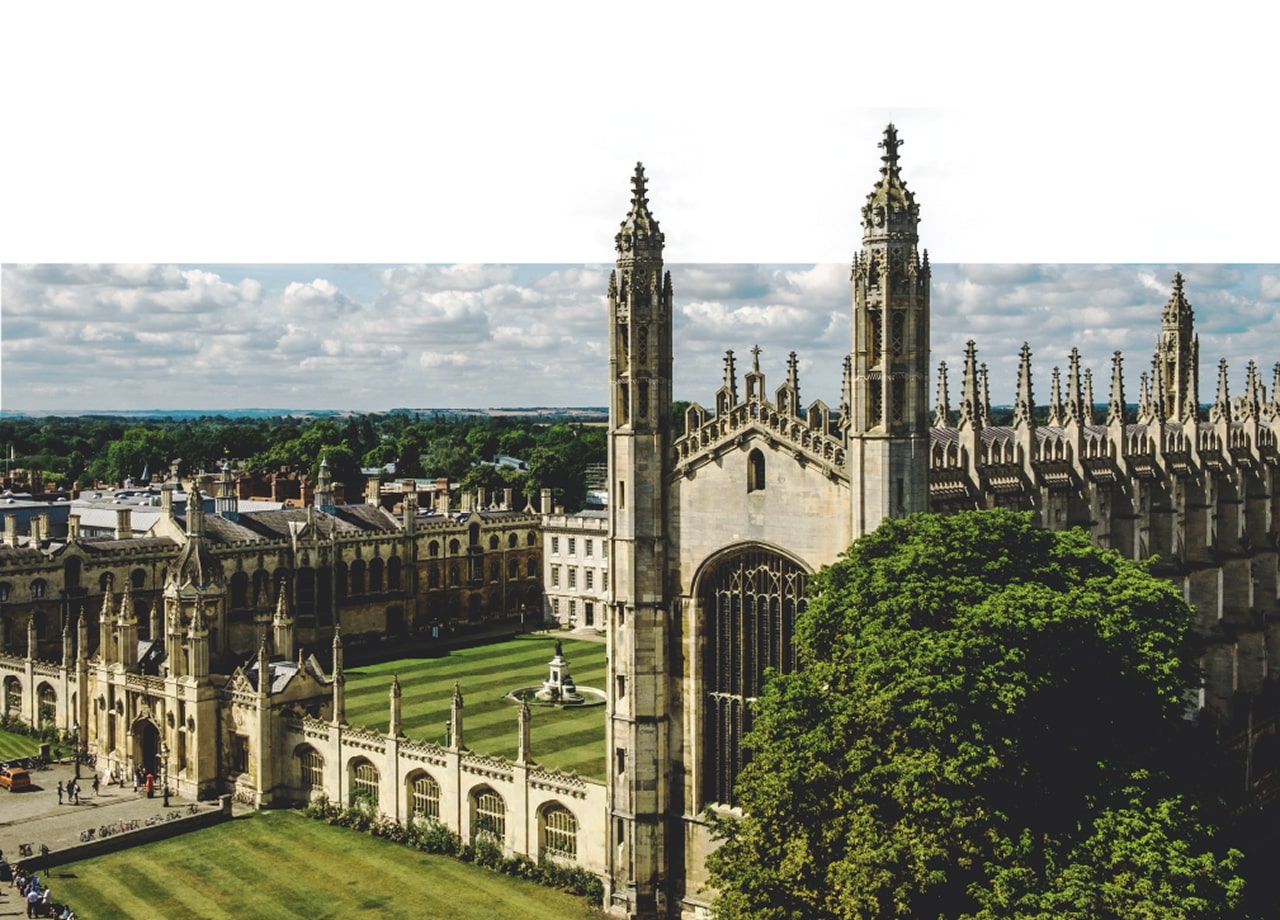
As UK application season approaches, many students are navigating the stressful process of applying to universities. DP2 student Ana Karla Vodanović recently completed her UCAS applications to some of the UK’s most prestigious universities, including Cambridge University, UCL, Imperial College London, and King’s College London. She has shared her experiences, challenges, and advice for future applicants wishing to go down a similar path.
What made you decide to apply to universities in the UK instead of other countries or staying local?
“I decided to apply to the UK because of their very good universities, as well as the fact that living in London or Cambridge seems very nice. I mean, after all, why not?”
How did you choose which universities to apply to (was it based mostly on rankings, location, or the course content)?
“Since Brexit, medicine students from the EU have to pay the overseas fees, which are huge, so I think that the only way I will be able to go is if I can get a scholarship, which is why my main focus was to find universities which offer at least some scholarships to international students, while having large quotas for international students in medicine. Additionally, I focused on universities in London (and Cambridge University).”
When did you start working on your UCAS application, and what part took the most time?
“Well, when applying to medicine programs, firstly you have to take the UCAT exam ( which takes place in September), so I applied to that quite late, which meant I had very little time to study for it. UCAT has a pretty peculiar type of entrance exam, as the tasks (especially in the “Quantitative Reasoning and Decision Making” sections) are very easy, making the main problem the fact of there being very little time to solve them. Afterwards, applying through UCAS is not hard, as the only thing (except filling in a short section about personal details) is writing the personal statement.”
The personal statement is such a big deal for UK applications, how did you approach writing yours?
“So, there are three questions that need to be answered. Firstly, why you want to study the program you are applying to, then, how has your schooling and academics prepared you for the course, and lastly, how have your extracurriculars helped you decide on what you want to study and how have these prepared you for the program. I watched a couple of YouTube videos and read some examples online to really see what the focus is on. What I realised was the the word count is very small, meaning that it isn’t smart to just write about everything you’ve ever done, but to really focus on a couple of things which they find key, as well as highlighting what you have learnt and how that experience can help you in your future profession or studies.”
What’s one challenge you faced during your application journey, and how did you overcome it?
“For medicine in the UK, they require some sort of work experience (something related to medicine). So, what most people (especially those living in the UK) do is shadow doctors inside hospitals, which isn’t possible in Croatia as a high school student. This is what I had to figure out, as I didn’t have any experience in a hospital (and how to minimize the effect of that on my application). Since I couldn’t do anything in a hospital, it came down to either an elderly home or volunteering in the context of something I was very passionate about (which is what I chose). I’ve been a scout leader for the past two years for middle schoolers, for which I organise weekly meetings, and spend time over summer at camp.”
What advice would you give to students who are planning on applying to the UK in the future?
“I would advise them to really keep track of deadlines (as some universities and programs have very early (October) deadlines). Also, I would tell them not to stress too much. The entrance exam (at least UCAT) is really not that complicated. You can do well with little preparation (the tricky part is the very short time you are given). You don’t need to start early in the summer, but do start at least a few weeks before school starts.”
How do you feel now that your applications are submitted?
“I feel very relieved. Even though the same day that I finished applying I started getting so many emails from all the universities I applied to. But, yes, knowing I don’t have to do anything till I find out if I’m invited for an interview feels great.”
If you get accepted to your top-choice university, what will be the first thing you do when you find out?
“My top choice is Cambridge University, and if I got accepted I would be very happy and call all of my friends and family to tell them. Still, I wouldn’t celebrate too much as I wouldn’t know if I had gotten a scholarship (and without a scholarship I cannot go). Either way, it would be a great feeling.”
Ana Karla’s journey shows just how much dedication goes into applying to universities abroad, especially competitive programs such as medicine in the UK. As she awaits her interview invitations, she remains relieved to have completed a major step. Her experience inspires other students to aim high, and stay organised.